Should I start a relationship with someone who has a terminal illness?

I recently met this guy who is amazing. We get along very well. I really like him, and I would love to have a relationship with him, but I found out that he has pancreatic cancer and only has three to five years to live. I just really don't know what to do. I think it would be considered screwing myself over by getting emotionally involved with someone who is going to die soon. But, I also feel for him, and I think everyone should have a chance at love. What should I do?


Is my hair addicted to dandruff shampoos?

I have dandruff that responds well to over-the-counter shampoo. Ergo, I have been using the stuff almost exclusively for ten years. No brand in particular, sometimes zinc pyrithione (the blue stuff!), sometimes coal tar (the smelly brown stuff!). Anytime I switch to non-dandruff shampoo for like three to four days straight, I get my dandruff back. I worry that I might be addicted to dandruff shampoo. Should I worry?


What can I do to take care of my very oily hair and skin?

Ever since high school, I've had very oily hair and skin, but it became worse in college. Now I'm in my mid-twenties and have to shampoo my hair about 10 times each day to get it clean. Then by evening it's already oily again. This isn't my scalp trying to moisturize itself after being over cleaned, because I've tried not washing it completely and it's even oilier the next day.

Are there any special shampoos or medications that help reduce oily skin? I've tried some facial products from my dermatologist, but they haven't reduced the oil production. This is an embarrassing problem and limits the overnight activities I can do, like camping or staying with friends.


Was I discriminated against?

I'm an Ethiopian student at a university in the US. I have been living in this country for many years and I love it. However, I've noticed a certain trend in people's general reaction concerning my place of origin. I speak English with no accent. When people first meet me, they assume that I'm an American. As such they behave normal until I tell them that I am a citizen of Ethiopia. At this point pretty much all of them immediately seem to develop a sort of superiority complex and start treating me as if I were an inferior being. They seem to respect me less and tease me every way they can. My opinions (even professional ones) are rejected as unacceptable.

Frustrated with this extreme prejudice, I lied to some of these people and told them that I actually am an American and not an Ethiopian. I noticed immediately that their attitudes towards me changed and started treating me as an equal. Encouraged by the result of this little social experiment, I've shied away from telling my place of origin to people to avoid mistreatment. However, I feel guilty doing it. Was I discriminated against because of my place of origin? Any words of wisdom for me, dearest Alice?


Are short sleeps and long naps healthy?

I find that I'm most alert late at night, and at school I'll stay up till three or four in the morning. Since I've had morning classes in the past, I've tried to form a habit of going to bed earlier — around midnight or one — but realistically, I don't think this is ever going to happen. I was thinking of trying, when I go back to school this fall, to go to bed around three or four and sleep for four hours, and then also take a four-hour nap during the day. Is this a good solution, or will I be more tired than if I sleep eight hours straight at night? Thanks!


Is not being allowed to spend time with friends a problem in a relationship?

1) I've been going out with my boyfriend for almost five months and I love him very much. We get along great and enjoy spending time together. However, sometimes I feel like we spend too much time together. I barely have time for work and school and still make him happy. If I tell him I'm busy he says he's okay with it, but later he gets mad at me for not making enough time for him and doesn't think I'm as committed to our relationship as he is.

This especially bothers me because I have pretty much lost my three best friends. They were never really crazy about him to begin with, but I didn't expect them to be best friends too. Ever since we have been going out, they do not ask me to do anything, yet I haven't really asked them to do anything either. I want to know how I can explain to him that even though I like spending time with him, I need time for other friends too. I don't plan on breaking up with my boyfriend, but if I did, I'm afraid my friends wouldn't take me back. I want to be able to make time for both.

2) My husband gets mad at me if I want to spend time with a friend. He says I don't have enough time for him. If I do spend time with a friend, he complains that everyone else is more important than he is because if I have enough time to spend with them I must have it to spend with him. I am only asking for one night out a month. We work together and spend every night together — is this asking a lot? My husband has no social life outside of me. If I don't want to spend all my time with my husband, does this mean I don't love him? He thinks so. What should I do? Help!!!


What's the difference between fluid during arousal and discharge?

This might sound like a gross question, but I do need an answer! When my partner performs oral sex on me, I'm not sure if my vagina is moist because I'm wet or because I have vaginal discharge... which is what? Isn't it normal for a woman's vagina to be somewhat moist, and to have a little discharge? When a woman gets wet, how can she tell? And know the difference between that and discharge?

Also, my partner and I haven't tried intercourse yet (I am a virgin)... I've read your previous answer to a man who said his penis might be too big for his partner; I am worried that I'm too small/tight for my partner. It doesn't look easy for him to even enter, and I don't know how I can make my opening wider to accommodate him (how much foreplay, how long?). How much pain does the woman feel? Thanks a lot!!


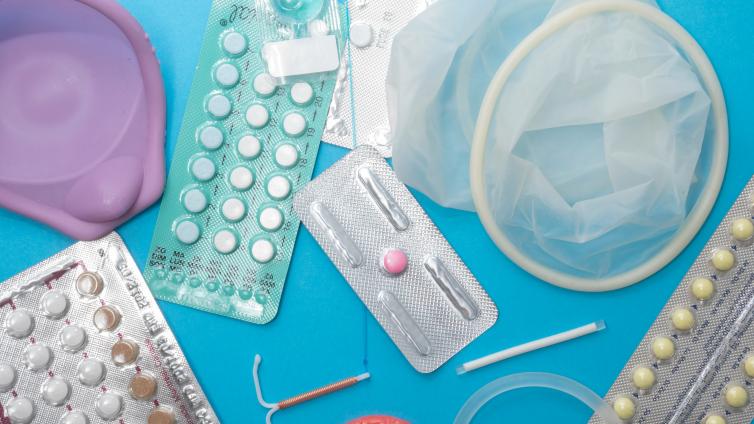
Birth control options

Birth Control Basics

Birth control (or contraception) is any regimen or medicine used to prevent pregnancy.

Most birth control options are used by people with internal reproductive anatomy such as a uterus, vulva, and vagina, while only a few options are available for those with external reproductive anatomy such as a penis and testes.

View Resource Birth Control Basics

Do I need to stay home from class if I have chickenpox?

I've come down with chickenpox. Should I stay home from classes even though 90 percent of adults have already had it and are thus immune? If I take great care washing my hands and avoiding coughing anywhere but into the crook of my arm, will I be reasonably assured of not spreading it?


Two characters talking with floating trans flag hearts

Transgender Health and Wellness Recommendations

Health guidelines for transgender people are unfortunately an under-researched topic. Most existing guidelines are extremely binary and based on sex assigned at birth, which comprises anatomy, body composition, and hormones. The research doesn’t offer much guidance for non-binary or intersex individuals. Knowing whether to follow existing female or male guidelines can therefore be confusing and often requires the guidance and support of a health care provider.

View Resource Transgender Health and Wellness Recommendations
Stress

Stress: The Basics

Stress is a normal psychological and physical reaction to the demands of life. Work, school, relationships, and daily hassles can often serve as stressors, or sources of stress. Stress isn’t necessarily a bad thing. Good stress, or eustress, pushes us to work harder. When this stress becomes overwhelming or hard to manage, it’s called distress and can impact your health.

View Resource Stress: The Basics
STI virus

STI Basics

Sexually transmitted infections are infections that are transmitted from person-to-person during anal, oral, or vaginal sex; genital skin-to-skin contact, or when fluids are exchanged from one person to another. This can occur via direct contact with the fluid or through the mutual use of sex toys.

View Resource STI Basics
Calendar with date circled

Nicotine and Tobacco: What Is It and How to Start Your Quit Journey

Quitting nicotine and tobacco is no small feat—and sometimes quitting can be difficult to navigate. As you plan your quit journey, there are many different things to consider to make these next steps easier. This includes having an understanding of nicotine and tobacco, how to get started, and what supports you have available to you during your journey. 

View Resource Nicotine and Tobacco: What Is It and How to Start Your Quit Journey
People sitting in a circle talking

Nicotine and Tobacco: How to Navigate Withdrawals When Quitting

If you’ve made the decision to quit nicotine, you might experience withdrawal and other unpleasant side effects. While this shouldn’t deter you from continuing your quit journey, there are some considerations when navigating nicotine withdrawal.

View Resource Nicotine and Tobacco: How to Navigate Withdrawals When Quitting
Pride flag with stethoscope

Gender Affirming Care: Surgical

Gender-affirming care (GAC) is an umbrella term for health care that aims to help a transgender or gender diverse person’s body better align with their gender identity. You might seek out GAC if you experience gender incongruence—when the gender you identify with conflicts with the sex you were assigned at birth. There are many different forms of GAC, including both lifestyle changes and medical interventions. The World Professional Association for Transgender Health (WPATH)—the organization often recognized as the gold standard for GAC— outline guiding recommendations for GAC. Additionally, it’s helpful to keep in mind that medical transition isn’t necessary to identify as transgender or gender diverse.

View Resource Gender Affirming Care: Surgical
Health care provider with stethoscope holding heart shape with transgender flag colors

Gender Affirming Care: Non-surgical

irming care (GAC) is an umbrella term for health care that aims to help a transgender or gender diverse person’s body better align with their gender identity. You might seek out GAC if you experience gender incongruence—the state in which the gender you identify with conflicts with the sex you were assigned at birth. There are many different forms of GAC, including both lifestyle changes and medical interventions. The World Professional Association for Transgender Health (WPATH)—the organization often recognized as the gold standard for GAC— outline guiding recommendations for GAC. Additionally, it’s helpful to keep in mind that medical transition isn’t necessary to identify as transgender or gender diverse.

View Resource Gender Affirming Care: Non-surgical
Group of friends laughing

Communicating and Relating

Many people agree that communicating with others is scary. In fact, enough books on communication and relationships have been published to fill a library. When it comes to relating with fellow humans, there are a number of important factors to keep in mind:

View Resource Communicating and Relating
Rubber gloves, speculum, and other medical devices for a pap smear

Cervical Cancer Screening (Pap Test)

Cervical cancer is a type of cancer that develops in either the cervix itself or on the walls of the cervix. Most cervical cancer cases are caused by the human papillomavirus (HPV) which is passed during sex. While penile-vaginal sex is the most common route of transmission, HPV can also be spread during oral and anal sex. Often the early stages of cervical cancer go unnoticed. However, as the cancer grows, other symptoms begin to appear such as:

View Resource Cervical Cancer Screening (Pap Test)
Internal and external condom

Birth Control Options – Barrier Methods

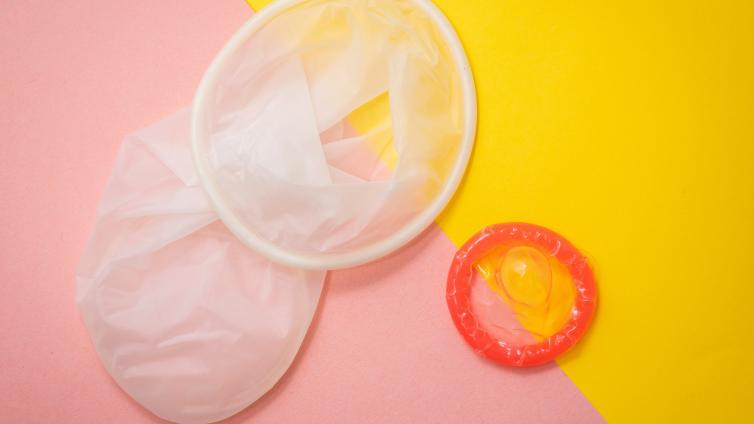
These methods attempt to block sperm from fertilizing an egg, either with a physical barrier or a substance that lowers the ability for sperm to swim and meet an egg. Some options can also reduce the chance of contracting or spreading STIs.

View Resource Birth Control Options – Barrier Methods
Surgical tools

Birth Control Options – Surgical Methods

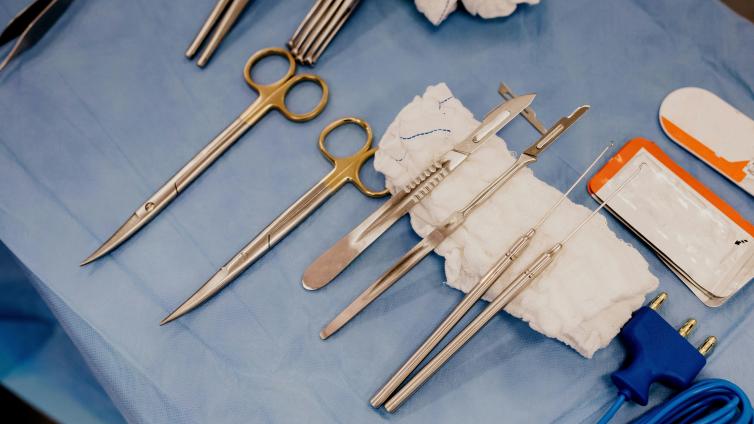
These methods are considered permanent birth control or voluntary sterilization options because they involve a surgical procedure that’s generally difficult or expensive to reverse. Additionally, reversing this procedure does not ensure that your fertility will return to pre-procedure levels. And it’s important to note that these options do not protect against STIs.

View Resource Birth Control Options – Surgical Methods
Monthly planner

Birth Control Options – Lifestyle Options

While lifestyle options are typically the least effective at preventing pregnancy—aside from abstinence—they are often the most cost effective. However, they might involve some planning or communication between sexual partners to prevent sperm from fertilizing an egg. Lifestyle methods of birth control do not prevent against STIs, so be sure to use a barrier method if you are looking for protection.

View Resource Birth Control Options – Lifestyle Options

Is there a connection between cortisol, depression, and weight loss?

I recently went to my doctor because I've been unable to lose weight. I've been on a successful diet, accompanied with a reasonable exercise plan, but I've seen no real results. A series of tests were run — I've got optimum blood pressure, low cholesterol, and I am not diabetic. But, when my cortisol levels were checked — they were very high. The doctor suspected there was a possibility that I might have Cushings' Syndrome — but another test was run and that came up negative.

I was doing research on the internet, and I found that there was a link between excessive cortisol and depression. I was diagnosed with clinical depression when I was 12 (I am now 21). And I am currently untreated. What is the link between cortisol levels and depression? Are excessive cortisol levels a physical manifestation of depression? Or does an excess of cortisol for some other reason cause depression? Does an excessive amount of cortisol cause weight gain, or in my case prohibit weight loss? And if there is a connection — will treatment for my clinical depression (in the form of prescription pills) help me?

I've been unable to find answers anywhere, or at least a good source to tell me to stop worrying — any help would be appreciated.


How do I talk about ableism without losing friends?

I have an invisible disability and I'm really getting into disabilities activism. Even in liberal circles ableism is still pretty accepted and this upsets me. However, when I try to educate people around me, it sometimes goes awry. I had one friend get upset when I called her out for using the word "retard." Another got upset when I pointed out that her Facebook post of inspirational people with disabilities (that just showed people with disabilities doing normal things) was a little offensive and tried to tell her about "inspiration porn." I get that using the word "retard" is normal as is "inspiration porn." I just don't think it should be.

I know my friends are caring, socially conscious people. I expect people to be a little upset, but ultimately I would also expect them respect the fact that it's really not OK to objectify people with disabilities in the way that inspiration porn and the use of words like "retard" do. What I want to know is how do I point out that people are expressing a harmful social bias, without having them get so upset that they write me off as an over sensitive concern troll?


How do I understand my racial identity?

I'm black and I have many white friends. It doesn't bother me at all until I get around a lot of other black people or around certain family members. Sure some joke around with me saying I'm an "Oreo." But it really gets to me. I'm tired of people saying "acting white" or "acting black" or "the man keeps putting the black man down." It doesn't take long for race to come up in a conversation with some people. And that's when I really feel out of my element. I know no race is perfect. But I feel like where blacks are now is nowhere near what Dr. King was fighting for. Maybe I'm too emotional about it, but everyday I still wake up black.

For instance, I love all types of music, including rock, classical and country music. And these are some reactions: 1. Why am I listening to that "white people music"? and 2. I feel out of place if I don't know one of the latest rap songs. It's little things like this that just make me want to wish there weren't any races. But races and different cultures are beautiful and so much can be learned. I'm happy and comfortable with myself, but not my race as a whole. And on some days, it really gets me down to a point where I just cry. Am I just chasing an insatiable dream?


Why do I still feel sick after drinking weeks ago?

I am a 23 year old female who enjoys a few glasses of wine but, in my opinion, doesn't drink more than the average college student. A few weeks ago, I had quite a bit to drink and haven't felt the same since. I am dizzy, forgetful, confused and my liver is very tender to the touch. I have continued to have a few glasses of wine a couple nights out of the week and it seems to be the only thing that gets me back to feeling "normal." Is this a normal way to feel or should I be concerned?


Why was my first time so painful?

1) I have never had sex, but I have tried now twice with my boyfriend, and it has been incredibly painful. It felt like there was a barrier inside me, and the second time I bled. I feel like I am relaxed, and my boyfriend is very gentle and slow, but it still really hurts — more than I think it should. I am able to use tampons — I'm not that small — but I don't know what the problem is. Is it supposed to hurt this much? Could there be something wrong?

2) I'm a virgin, and the first time my boyfriend inserted his fingers in my vagina, it hurt a lot, and I got sore down there. I didn't reach an orgasm, but faked it so he would stop. I didn't enjoy it at all and I was wondering... is this going to happen when I have sex? Is it going to be as disappointing?


How do I manage feelings of embarrassment over having to visit a gynecologist?

I'm a 21 year old woman with white lumpy vaginal discharge (odorless)...I thought it was thrush but after two courses of yeast infection cream it has not resolved...I have never had sex, so can't have an STD...I get bad pain in my lower back and sacro-iliac region with my period and with ovulation though I don't know if this is relevant...I'm embarrassed to see a health care professional about this and don't know if I'm just concerned over nothing...


Why does wearing wool make me itch?

Is there any cure for itching when I wear wool clothes? In the winter time, I love to wear my wool pants and sweaters, but they make me itch. I've tried wearing pantyhose underneath, but it doesn't work.

Help.


How does smoking hookah compare to smoking cigarettes?

My friends and I occasionally (once a week or so) like to smoke the "Hookah" or sometimes referred to in Arabic as an "argeelay." The tobacco that it comes with smells really good and comes in all kinds of flavors, such as apple, mango, mixed fruit, etc. Anyway, I consider myself to be pretty healthy in that I have never experimented with drugs, never smoked cigarettes, and rarely drink alcohol. My question is about the health effects of smoking a hookah. The rewards are mostly relaxation after a long day of studying for law school. The hookah provides this through smell, flavor, and sound of the water that filters the tobacco when you puff on it. However, I don't know what the health risks are. How does it compare to cigarettes? People say that it's much safer than cigarettes... and according to the packaging that comes with the tobacco, there are far fewer harmful ingredients... in fact, it's mostly tobacco and molasses. It's a very popular trend these days. It's time we get a good source of information. So what's the verdict?


What can I do if I'm experiencing an aversion to sex with my long-term partner?

I've been with my boyfriend for just over 4 years. Our sex life has always been the strong thread in our relationship, even when we've had trouble in other areas. We both feel we are the best sexual matches we've ever had. But over the past 8 months things have slowly degraded on my end. He is still as excited as ever, but I just don't feel like it. When we try, I actually feel physically protective, as if blocking my body from a stranger, especially my breasts. It's like a physical compulsion to protect, but neither of us have a history of abuse in our relationship or outside of it, and his approach is loving and open. When he's clothed and we're not about to have sex I love holding him, being held by him, standing next to him, touching him, etc. I'm not physically repulsed by his body: I recognize that he's a ridiculously attractive man! I had some advice that I shouldn't force myself to have sex if I don't want to, but I've also heard the opposite: that I should stop thinking and just push through my body's shutdown. Most of the times when I do force myself I end up enjoying it, but that doesn't take away this "repulsion" feeling at the start. The worst thing is that he feels rejected and dissatisfied and keeps asking what he can do to turn me on. What to do?


If I don't take birth control pills at exactly the same time am I unprotected?

I have two questions, first: On my birth control pill box instructions it says to take a pill each day at ABOUT the same time. I was wondering, does this mean that I should set an alarm to make sure I take it the exact minute every day (which is what I've been doing) or can I take it within a couple of hours difference if I decide to sleep in on Saturday?

Secondly: My doctor told me that if I miss a pill to consider myself unprotected for that month. However, after I left I realized that in biology class we learned that a ovum (or egg) can only survive a few days inside the fallopian tubes and uterus and then it get absorbed into the body (or dies). If I missed a pill then wouldn't I only be unprotected for the next couple of days (if an egg was produced in the 24 hr period that I didn't take the pill) instead of the whole month?


Is my vegetarian diet making me feel tired?

I am a vegetarian and frequently feel like it takes a long time to "wake up" in the morning and some days I feel like I never quite get there. I can't help but think this may be diet related. I went to a doctor for a test for anemia which was negative and I always try to get a good nights' sleep (six to eight hours). In the past I have tried to gain weight and failed miserably. I remain a little underweight but get a good deal of exercise each day. Any ideas?